
Cases & Solutions
Installing Two XZ988/20SC DIP Shoe Machines in Tunis
In August 2026, a Xingzhong engineer from the Egypt after-sales center completed a ten-day installation program in Tunis covering two XZ988/20SC machines, auxiliary equipment and factory-floor layout for a new footwear plant targeting 4,000-4,500 pairs per day after ramp-up.
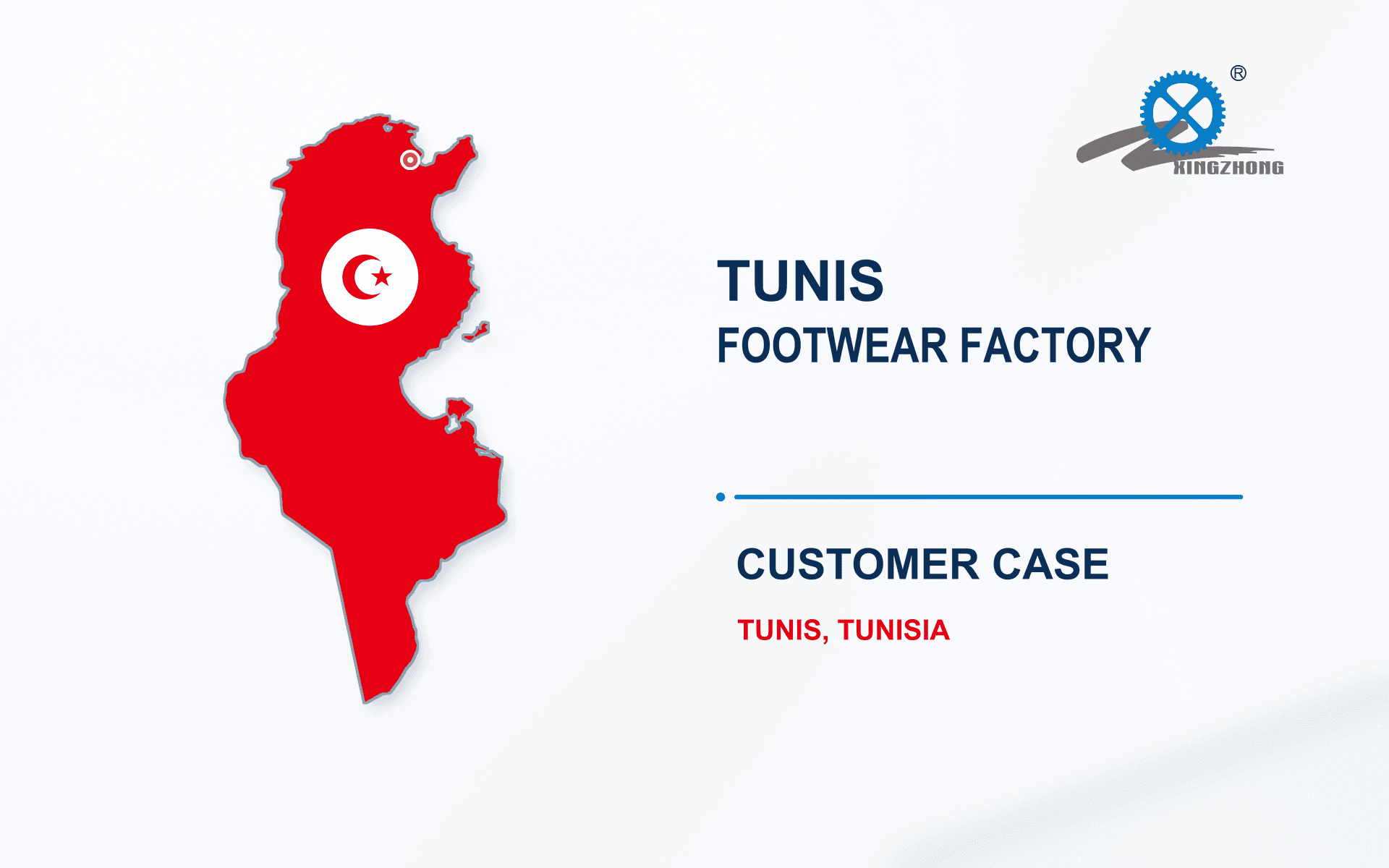
DIRECT ANSWER: In August 2026, Xingzhong sent an engineer from its Egypt after-sales center to Tunis, Tunisia, to install two XZ988/20SC 20-station semi-automatic DIP shoe machines for a China-based footwear manufacturer establishing an African production site. The ten-day program covered the two main machines, confirmed auxiliary equipment including a lasting table with oven and a packing conveyor, and factory-floor layout coordination. After ramp-up, the whole Tunis factory is planned to produce 4,000-4,500 pairs per day; this is a planning target, not a per-machine rating, achieved output, or production guarantee.
The customer is intentionally anonymous. No customer name, brand, logo, headquarters address, precise Tunis factory location, investment value, workforce figure, commercial term, or customer quotation is disclosed in this review draft.
A China-Based Footwear Manufacturer Establishing Production in Africa
The project began with a specific business decision by a China-based footwear manufacturer: as its own supply network was being reconfigured, the company started building a production site in Africa and transferring part of its manufacturing capacity. This wording describes the customer's project background only. It is not presented as a universal strategy for the footwear industry or as a policy conclusion about manufacturing relocation.
For an overseas factory, selecting injection equipment is only one part of the setup. The main machines must fit the intended product flow, supporting operations, utilities, material movement, operator access, and packing route. The Tunis engagement therefore extended beyond positioning two machines and treated the production floor as a connected operating system.
Why Tunis Provides Relevant Footwear-Manufacturing Context
Tunisia has an established leather and footwear base. The official Tunisia Industry sector overview currently reports 171 leather and footwear enterprises with at least ten employees, including 129 wholly exporting enterprises. These figures provide regional context only; they do not identify the customer, prove the customer's scale, or predict the outcome of this installation.
Two XZ988/20SC 20-Station Semi-Automatic DIP Machines
According to Xingzhong's first-party project records, the Tunis plant received two XZ988/20SC machines. Each is a 20-station semi-automatic direct injection shoe machine. In the DIP process, a sole is formed directly around a lasted upper within a mold, bringing injection and sole attachment into one production sequence. Station count describes the rotary production layout; it does not by itself determine daily output.
Regional Service from the Egypt After-Sales Center
The assigned engineer traveled from Xingzhong's Egypt after-sales service center to Tunis in August 2026. A regional service base can shorten the practical distance between an equipment supplier and an African factory. For this project, it provided a direct route for on-site installation support while the customer's new production site was being organized.
A Ten-Day Integrated Installation Program
The engineer worked at the Tunis site for ten days. The recorded scope combined the installation of the two XZ988/20SC machines with auxiliary-equipment placement and production-floor layout coordination. The ten-day duration belongs to this project and should not be treated as a standard installation promise. Schedules for other factories depend on shipping condition, site readiness, access, utilities, tooling, supporting equipment, local labor, and the complexity of the agreed scope.
Auxiliary Equipment: Lasting Table with Oven and Packing Conveyor
The confirmed auxiliary-equipment work included a lasting table with oven and a packing conveyor. The lasting table with oven supports upper-preparation work around lasting, while the packing conveyor provides an organized path for finishing and packing activities. These are examples from the recorded project, not a complete list of every item supplied or installed. No quantity, oven temperature, conveyor speed, or efficiency improvement is claimed.
Coordinating Main Machines, Support Equipment, and Floor Layout
Floor layout connects equipment capability with daily factory organization. The placement of the two rotary machines needs to preserve working clearance and access while fitting the path of uppers, lasts, molds, work in process, inspection, finishing, and packing. The approved case record confirms layout assistance, but it does not disclose the floor area, drawing, aisle dimensions, utility points, or customer-specific workflow.
Understanding the Planned 4,000-4,500-Pair Daily Capacity
After the Tunis facility completes its production ramp-up, the customer's planned whole-factory capacity is 4,000-4,500 pairs per day. The range must be read at factory level. It is not the rated capacity of the two XZ988/20SC machines, a per-machine figure, an output already achieved in August 2026, or a volume guaranteed by Xingzhong.
Actual sellable output can vary with shoe construction, material behavior, mold availability, cooling, shift pattern, upper preparation, operator organization, changeovers, auxiliary processes, quality requirements, and maintenance. The planned 4,000-4,500 pairs per day therefore communicates the customer's intended scale after ramp-up without converting station count into an unsupported hourly or daily machine calculation.
What Overseas Shoe-Factory Projects Should Define Early
A shoe factory setup in Africa benefits from a complete technical brief before equipment shipment. The supplier and factory should align the boundaries of the project and the inputs needed for installation. Useful items to define include:
- the intended shoe constructions, size range, upper preparation, and quality requirements;
- the agreed injection process, materials, molds, lasts, and style-change plan;
- the main-machine configuration, station count, automation level, and operator organization;
- the auxiliary operations required before and after direct injection;
- the available floor space, unloading route, machine clearances, and internal material flow;
- the verified electrical, cooling, compressed-air, ventilation, and other site conditions; and
- the installation scope, site-readiness date, local contacts, service route, and communication process.
This information allows the equipment supplier to review machine selection and integration requirements without relying on station count or a target capacity alone. It also gives the customer a clearer basis for coordinating construction, utilities, tooling, auxiliary equipment, labor, and commissioning readiness.
From Equipment Supply to Factory-Setup Support
The Tunis case illustrates a broader service role within the authorized facts: two specified injection machines were installed alongside confirmed support equipment, and the engineer assisted with floor layout during a ten-day visit. For manufacturers establishing production away from their original base, this kind of coordinated engagement can help translate an equipment order into a more organized factory setup.
Reliable machinery and timely technical support can reduce exposure to avoidable startup disruption and support more predictable production planning. They do not eliminate the influence of materials, tooling, utilities, staffing, maintenance, and quality control. The practical objective is a production system whose main equipment, support processes, and factory conditions have been considered together.
Frequently Asked Questions
What machines were installed at the Tunis factory?
Xingzhong project records identify two XZ988/20SC 20-station semi-automatic DIP shoe machines. The customer and detailed factory location remain confidential.
When did the Tunisia installation take place?
A Xingzhong engineer worked at the Tunis site in August 2026. The complete recorded installation program lasted ten days.
What did the ten-day service program cover?
It covered installation of the two main machines, confirmed auxiliary equipment including a lasting table with oven and a packing conveyor, and factory-floor layout coordination. Those examples are not a complete equipment list.
Does 4,000-4,500 pairs per day describe the two machines' rated output?
No. It is the customer's planned capacity for the whole Tunis factory after ramp-up. It is not a per-machine rating, achieved production figure, or Xingzhong guarantee.
Where did Xingzhong's on-site engineer travel from?
The engineer traveled from Xingzhong's Egypt after-sales center to Tunis, providing a regional service route for the North African installation.
Explore Xingzhong DIP Equipment and Factory-Support Resources
Review the current XZ-988 rotary shoe injection molding machine reference and read the Direct Injection Process guide for an overview of DIP footwear production.
Browse Xingzhong's shoe machinery range or contact Xingzhong to discuss machine configuration, auxiliary equipment, site conditions, floor planning, and regional installation support for a new factory.
Sources and Fact Notes
Project-specific facts are based on Xingzhong's first-party project records. Customer identifiers and unconfirmed operational details are withheld.
- Official Tunisia Industry portal - Leather and footwear sector overview. Used only for current regional industry context, not for customer-specific claims.
- Xingzhong Egypt after-sales center - August 2026 Tunis installation video. Used as a first-party public project record; comments and engagement figures are not used as evidence.