Cases & Solutions
Installing a 20-Station Semi-Automatic DIP Shoe Machine in Coastal Kenya
In December 2025, a Xingzhong engineer traveled from the company's Egypt after-sales center to Mombasa for a six-day installation and trial-production program involving a new 20-station semi-automatic direct injection shoe machine.
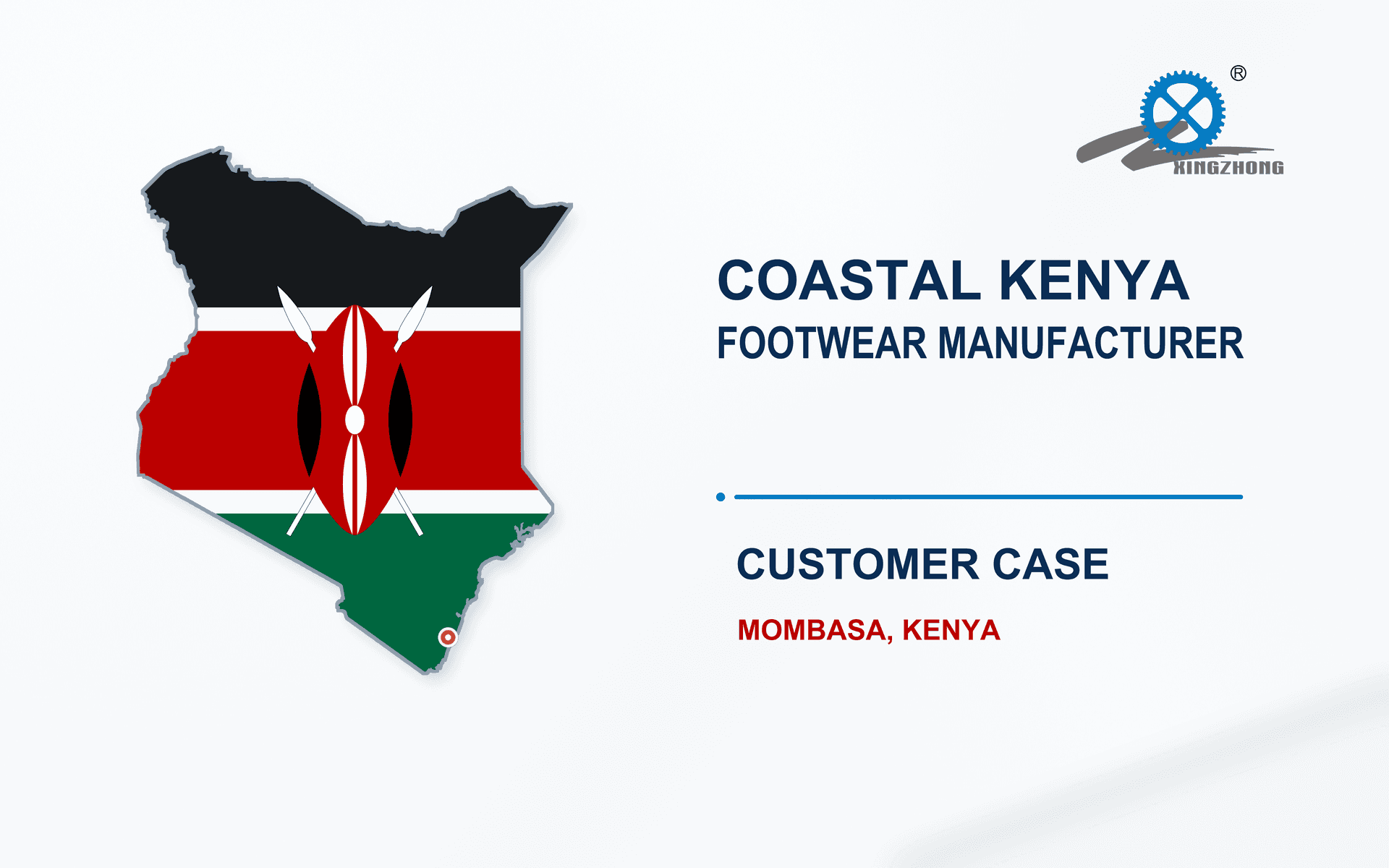
DIRECT ANSWER: In 2025, an established footwear manufacturer in coastal Kenya purchased a new 20-station semi-automatic direct injection shoe machine from Xingzhong. In December 2025, a Xingzhong engineer traveled directly from the company's Egypt after-sales center to Mombasa. Over six days, the engineer supported installation, commissioning, and trial production for leather casual shoes with a gum-rubber-look sole. The case demonstrates how regional technical support can help move imported footwear equipment from arrival to a controlled production trial.
The customer is intentionally anonymized. Its legal name, brands, precise address, workforce, capacity, and commercial terms are not published. Trial production is not an output guarantee.
An Anonymous Footwear Manufacturer in Coastal Kenya
The customer is an established footwear manufacturer in coastal Kenya. For this project, the production target was a leather casual shoe with a light-brown, gum-rubber-look sole. This describes appearance only; the compound is not disclosed. Mombasa is retained to explain the service route, while more specific identifiers remain private.
Kenya's State Department for Industry identifies footwear as part of the national leather value chain and highlights equipment, technical capability, and local manufacturing as development priorities. This sector context does not identify or validate the customer.
The 2025 20-Station Semi-Automatic DIP Machine
According to Xingzhong's first-party customer records, the factory purchased one 20-station semi-automatic DIP machine in 2025. DIP, or the Direct Injection Process, forms the sole directly around a lasted upper inside a mold. The case records the station count and operating format but does not infer the model, installed options, injection material, output, or cycle.
Regional Service from Egypt to Mombasa
In December 2025, the assigned Xingzhong engineer traveled from the company's Egypt after-sales center to Mombasa. For African footwear manufacturers, supplier evaluation includes more than machine specifications: buyers also need to know where support can come from and whether installation assistance can reach the production site.
Six Days from Installation to Trial Production
The on-site program lasted six days, covering the progression from machine installation through commissioning and trial production. The six-day period is a project record, not a standard promise for every installation. Actual schedules depend on site readiness, utilities, molds, materials, uppers, staffing, and the selected configuration.
A controlled trial brings the equipment and the intended product together. It allows the factory and service engineer to observe the machine, mold, upper, sole appearance, and operating sequence together. The service video shows equipment and trial footwear, but it does not establish undisclosed settings, acceptance criteria, or training activities.
Trial Production of Leather Casual Shoes
The trial product was a leather casual shoe with a gum-rubber-look sole. That wording describes the sole's light-brown visual effect without claiming that it contains natural gum rubber or any specific polymer. The upper, last, mold, compound, cooling, and settings must work together. The trial records a practical stage for the prepared combination, not a universal result for every style or material.
View the public service record: Xingzhong Egypt after-sales installation and trial-production video
What 20 Stations and Semi-Automatic Operation Mean
A 20-station rotary layout organizes multiple molds and uppers around a repeating production path. Semi-automatic describes the balance between machine-controlled functions and operator participation, but the exact division varies by configuration. Neither term should be converted directly into pairs per hour. Sellable output depends on shoe size, sole volume, cooling time, molds, upper preparation, operator rhythm, changeovers, utilities, and quality requirements.
Why On-Site Installation Support Matters
Imported machinery becomes productive only when it is integrated with the receiving factory. On-site support connects the machine with utilities, tooling, uppers, materials, and factory organization. It also gives technical teams a shared view of on-site conditions. Here, regional service helped the customer progress to trial production within the recorded six-day visit.
Reliable Equipment and Service for Production Planning
Stable machine behavior and timely service can reduce exposure to avoidable startup disruption and support more predictable planning. They cannot guarantee uninterrupted manufacturing: materials, molds, utilities, operators, maintenance, and quality control remain essential. The practical value is a clearer path from delivery to a controlled trial, backed by cross-regional technical communication.
What African Footwear Factories Should Define Before Installation
Before confirming a direct injection project, a footwear manufacturer should give the supplier a complete operating brief rather than relying on station count alone. Useful inputs include:
- the shoe construction, size range, upper type, and target sole appearance;
- the intended injection material and the approved compound-handling requirements;
- the mold and last plan, including the number of styles and expected changeovers;
- the required automation level and available operator organization;
- factory utilities, unloading access, floor space, and surrounding workflow; and
- the installation location, site-readiness date, communication contacts, and service expectations.
These details help the equipment supplier review configuration and service needs without turning a single specification into an unsupported production promise.
Frequently Asked Questions
What machine was installed for the coastal Kenya customer?
Xingzhong records identify one 20-station semi-automatic direct injection shoe machine purchased in 2025. The exact model, installed options, and injection material are not published.
When and where did the installation take place?
A Xingzhong engineer traveled to Mombasa, Kenya, in December 2025. The customer's name and precise factory address remain confidential.
How long did installation and trial production take?
The recorded on-site program lasted six days from installation work through trial production. This case-specific duration is not a standard installation guarantee.
What footwear was produced during the trial?
The trial involved leather casual shoes with a light-brown gum-rubber-look sole. The phrase describes appearance only and does not identify the sole compound.
Where did Xingzhong's installation support come from?
The engineer traveled directly from Xingzhong's Egypt after-sales center to Mombasa, demonstrating a regional service route for an East African installation.
Explore Xingzhong Direct Injection Solutions
For a current 20-station equipment reference, review the XZ-988 rotary shoe injection molding machine. The link is provided for general evaluation and does not identify the model installed at the anonymous factory.
Read the Direct Injection Process guide, browse Xingzhong's complete shoe injection machine range, or contact Xingzhong to discuss shoe styles, station count, automation, factory conditions, and installation support.
Sources and Fact Notes
The purchase, station count, operating format, service route, dates, six-day duration, and trial-production result are based on Xingzhong's first-party customer and service records. Customer identifiers and scale figures are intentionally withheld.
- Xingzhong public Facebook reel - installation, machine, and trial-footwear video. Reviewed as a public service record; comments and engagement figures are not used as evidence.
- Kenya State Department for Industry - Leather Value Chain. Used only for national footwear and leather-manufacturing context, not for customer-specific facts.