Industry News
What Equipment Do You Need to Start a PVC Direct Injection Shoe Factory in Kenya?
Explore the machines, molds, auxiliary equipment and production steps needed to start a PVC direct injection shoe factory in Kenya.
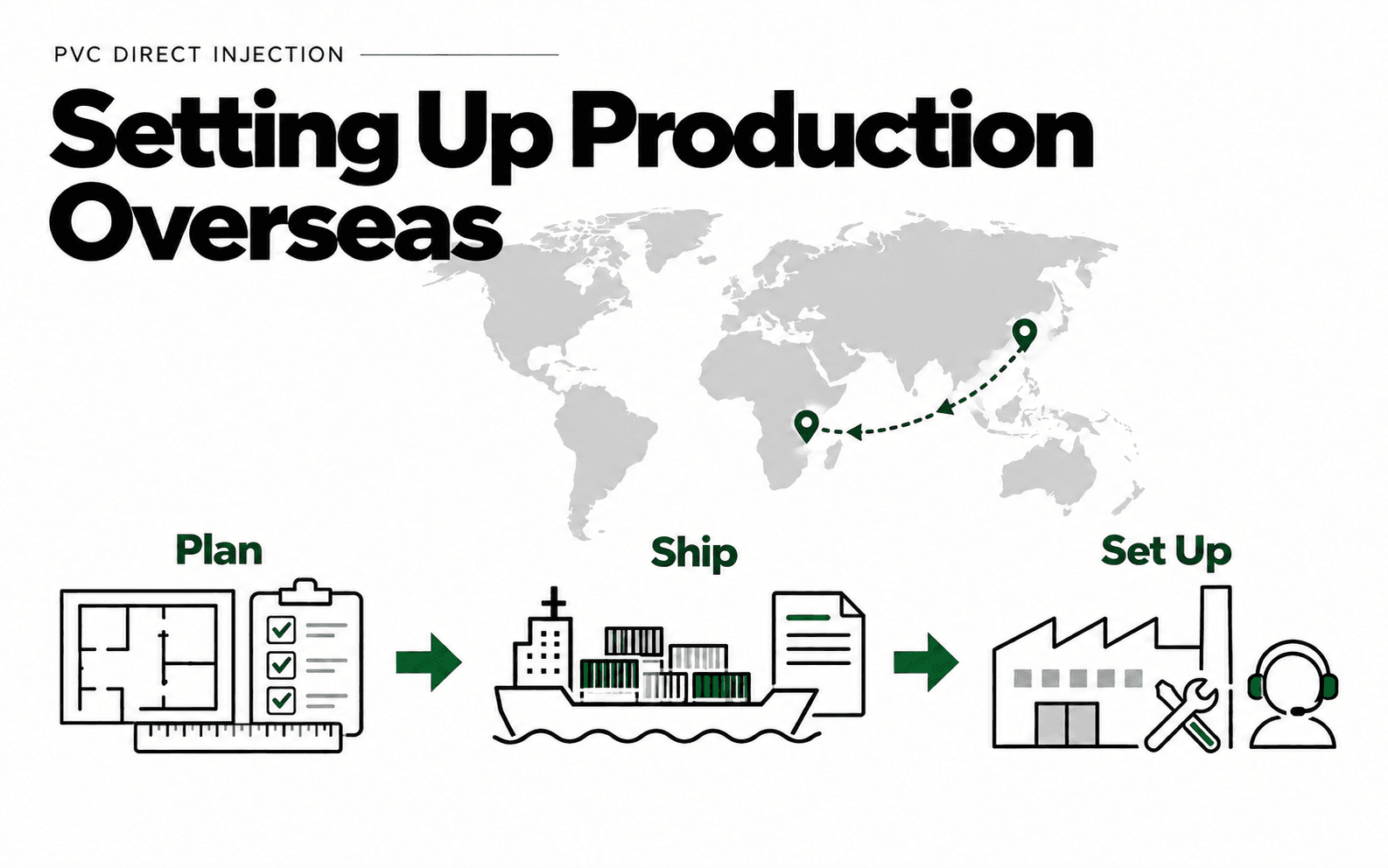
A PVC direct injection shoe factory needs a suitable injection machine, matched molds and lasts, material preparation tools, cooling equipment, and finishing and inspection tools. Cutting and stitching machines are also needed if you manufacture uppers yourself.
The Direct Injection Process (DIP) forms a PVC sole directly against a prepared shoe upper inside a mold. Equipment selection therefore starts with the complete shoe: its upper material, sole design, size range and intended use. For buyers comparing a PVC shoe making machine in Kenya, the main question is whether the entire equipment package can reliably produce their chosen footwear.
Kenya’s Footwear Market: Opportunities for Local Production
Kenya offers opportunities for footwear manufacturing, alongside strong competition from imported new and secondhand shoes. In February 2026, The Eastleigh Voice reported KNBS figures showing footwear imports of 18.99 million pairs during the first nine months of 2025, compared with 11.62 million in the corresponding 2024 period. These are overall footwear figures, not measurements of PVC direct injection shoe demand. Source: The Eastleigh Voice.
The same report highlights production costs and raw material constraints affecting local manufacturers. Import volumes demonstrate an active market, but they also show how much competition a new producer must face.
Kenya’s investment authority identifies footwear manufacturing as an investment opportunity in its March 2025 leather sector report. Its leather industry analysis provides useful context, although its market estimates should not be applied directly to PVC footwear. Source: Invest Kenya.
For PVC direct injection production, school shoes, canvas shoes and everyday casual footwear are product categories worth investigating with local buyers. Their suitability depends on the upper construction, comfort, durability and selling price.
A practical opportunity is to offer dependable sizing, consistent quality and timely replenishment. Local production may help retailers replace popular sizes sooner, provided materials and production are well managed. Regional East African sales could offer another route, but distributor demand and product requirements should be verified before treating them as future orders.
Define Your Shoe Product Before Selecting Equipment
PVC direct injection footwear has an upper onto which the sole is molded. This differs from molding an entirely plastic slipper, producing a rain boot, or making separate soles for later attachment.
Start with a reference shoe. Specify its upper material, sole weight and thickness, size range, colors, and required flexibility. These details determine mold design, injection requirements and material compatibility.
Next, decide where the uppers will come from:
- Purchased uppers: You need incoming inspection, suitable upper preparation and positioning, followed by injection and finishing equipment.
- Uppers made in-house: You also need cutting, stitching and any style-specific upper preparation machinery.
Do not assume every upper bonds successfully to every PVC compound. Trials should use the intended upper, mold and production material. Xingzhong’s guide to the direct injection process explains how these elements work together.
Essential Equipment for PVC Direct Injection Shoe Production
The following checklist separates core equipment from items required only for particular production methods.
| Equipment | Main purpose | Configuration requirement |
|---|---|---|
| PVC direct injection machine | Forms the sole against the upper | Essential; matched to the shoe and compound |
| Shoe molds and lasts | Define sole geometry and support the upper | Essential; matched by style, size and machine |
| Cutting and stitching machines | Manufacture shoe uppers | Required when making uppers in-house |
| Upper preparation and lasting tools | Prepare and position uppers | Selected for the shoe construction |
| Weighing, mixing and feeding equipment | Prepare and supply material | Configuration depends on the purchased compound |
| Cooling system | Controls required cooling circuits | Sized to the machine and operating conditions |
| Finishing and packing tools | Prepare shoes for sale | Basic provision required; automation optional |
| Inspection and testing equipment | Check consistency and performance | Basic checks in-house; specialist tests may be outsourced |
PVC Direct Injection Machine
The main machine must be designed for direct soling with the selected PVC compound. Check injection capacity, mold dimensions, station layout, temperature control and the required color arrangement.
Xingzhong’s XZ-988 rotary shoe injection molding machine provides one reference for discussing PVC/TPR equipment specifications. Final selection requires reviewing the actual shoe and mold requirements.
Station count alone does not establish daily output. Cooling time, loading, unloading, material behavior and the proportion of acceptable shoes all affect production. Request a trial using representative samples.
Shoe Molds and Lasts
Molds form the sole, while lasts support and shape the upper during production. Each planned size and style needs compatible tooling.
Specify left and right shoes, size quantities, tread design and upper fit. Confirm mounting, alignment, injection connections and any cooling interfaces with the machine supplier. Review DIP shoe molds as part of the complete machine package.
Upper Manufacturing and Preparation Equipment
For in-house uppers, typical equipment includes cutting presses or suitable cutting systems and sewing machines. Leather or synthetic constructions may also require skiving, punching or eyelet machines.
Preparation before injection can involve cleaning, roughing, conditioning or a validated primer treatment. The exact steps depend on the upper. A conventional cemented-shoe lasting and bonding line should not automatically be included in a DIP equipment list.
Material Preparation and Auxiliary Equipment
When buying approved, ready-to-process PVC granules, a separate compounding and pelletizing line is generally unnecessary. Weighing tools and controlled storage remain useful; mixing and feeding equipment depend on how color and additives are supplied.
Cooling equipment must meet the machine supplier’s flow, temperature and water-quality requirements. Whether a dedicated chiller is needed depends on the specified system and site conditions. Add compressed air equipment only where the selected machine or tools require it.
Finishing and Quality Inspection
Provide tools for last removal, flash trimming, cleaning and packing. Basic inspection should cover size, appearance, shoe weight and consistency between left and right shoes.
Establish a repeatable method for checking upper-to-sole bonding. Hardness, flexing, abrasion and other performance tests should follow the product specification, using suitable in-house equipment or an external laboratory.
How the Production Process Works
A typical PVC direct injection shoe workflow follows seven steps:
- Prepare the upper. Purchase or manufacture it, then inspect stitching, dimensions and material consistency.
- Fit the upper to the last. Position it accurately and complete the approved preparation procedure.
- Prepare the compound. Confirm the correct material batch, color and machine settings.
- Close the mold and inject. Plasticized PVC fills the sole cavity against the positioned upper.
- Cool and demold. Allow sufficient stabilization before removing the molded shoe.
- Remove the last and finish. Trim excess material and clean the shoe.
- Inspect and pack. Check appearance, sizing and bond quality against the approved sample.
Stable production depends on controlling this sequence. Poor upper positioning can create uneven edges, while unsuitable material or preparation can weaken bonding. Cooling must balance shape stability with the production rhythm. Record approved settings and inspect samples after material, mold or size changes.
What to Send Your Shoe Machine Supplier
A useful equipment proposal begins with specific product information. Send your supplier:
- Shoe samples or clear photographs, including the sole.
- Upper material and desired sole properties.
- Size range, color requirements and expected size distribution.
- Target output per shift and planned working hours.
- Whether uppers will be purchased or manufactured internally.
- Available floor space and electrical supply details.
- Requirements for molds, installation, training and spare parts.
Ask the supplier to identify included equipment and conditional accessories separately. To discuss a PVC direct injection shoe project in Kenya, contact Xingzhong with your samples and production requirements for a configuration review.
Frequently Asked Questions
What is the main machine needed for PVC direct injection shoes?
The core machine is a PVC direct injection shoe machine that molds the sole against a positioned upper. It needs compatible molds, lasts and supporting equipment. A machine designed only for separate soles or all-plastic footwear should not be assumed suitable for this process.
Do I need equipment to manufacture shoe uppers?
Only if you plan to make uppers internally. A factory purchasing finished uppers can omit cutting and stitching machinery, but still needs incoming inspection and the tools required to prepare and position those uppers for injection.
Do I need a PVC compounding and pelletizing line?
Usually not when purchasing ready-to-process PVC compounds approved for your footwear. Compounding and pelletizing are separate manufacturing operations. Confirm the supplied material’s preparation instructions before specifying mixers, feeders or other handling equipment.
Can one machine produce different shoe sizes and styles?
Often yes, within its technical limits and with appropriate tooling. Each change must fit the machine’s mold space, injection capacity and mounting arrangement. Different materials or color constructions may require additional capabilities; changing molds alone does not guarantee compatibility.
How should molds and lasts be matched to the machine?
Develop them around the shoe sample, size range, upper construction and machine interfaces. The supplier should verify mounting, alignment, cavity geometry and injection requirements. Approve trial shoes made with the intended compound before accepting the tooling for regular production.