
Cases & Solutions
Manufacturing Water Shoes with PVC or TPR: A Direct Injection Solution
Explore PVC and TPR water shoe manufacturing, from material selection and direct injection to equipment planning, with an application using Xingzhong machines in Egypt.
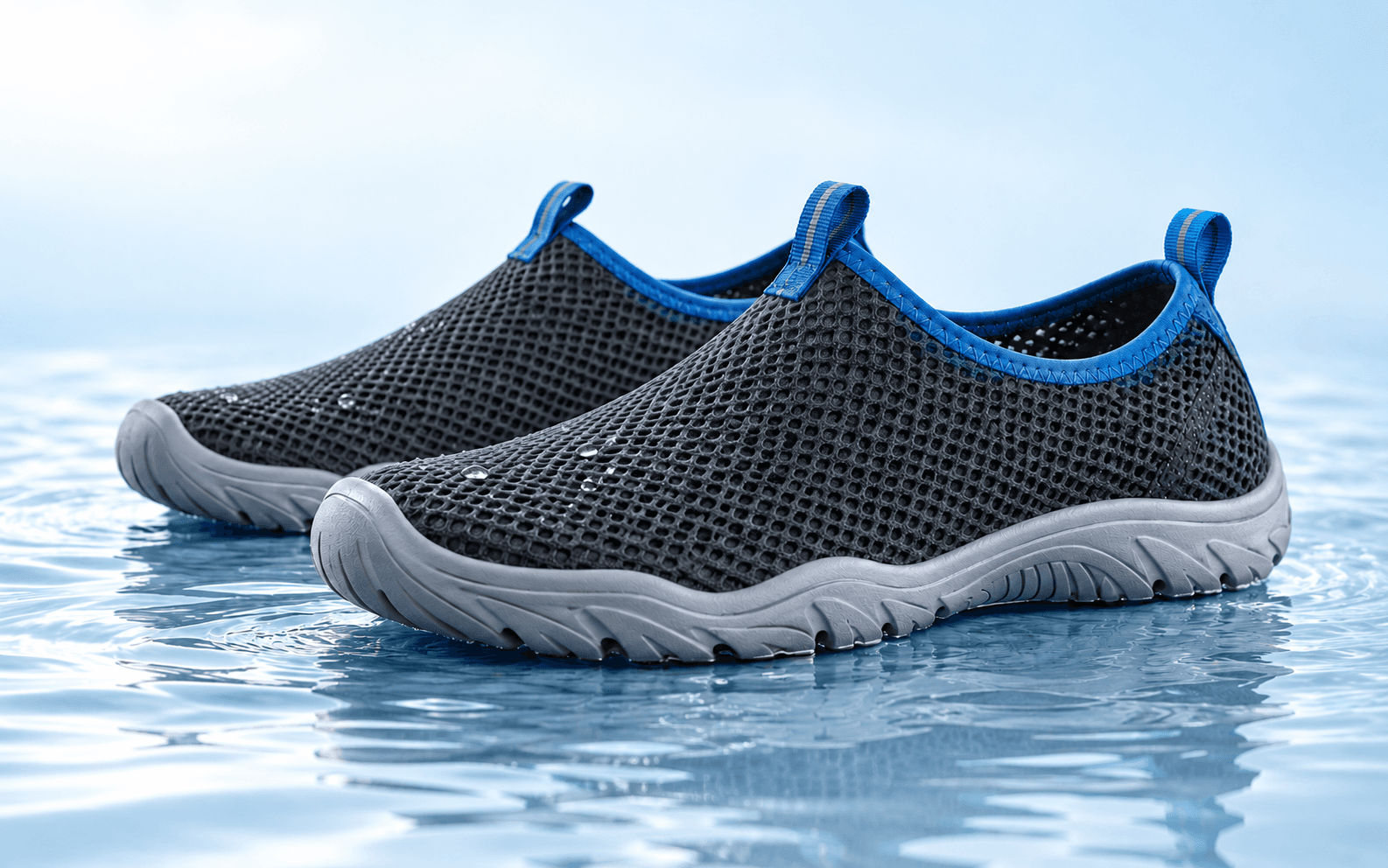
Water shoe manufacturing can use direct injection to form PVC or TPR soles onto prepared uppers. This approach brings sole molding and upper attachment into one production operation. For footwear factories and brands, it offers a practical route to explore when developing water shoes with textile uppers and thermoplastic soles.
The right solution depends on the intended use, compound, upper, tooling, and production requirements. A material name alone does not determine comfort, wet grip, or manufacturing cost. These decisions need to be considered together before selecting a direct injection shoe machine.
Xingzhong already has an application in this category: a footwear factory in Egypt uses Xingzhong machines to manufacture water shoes. The following guide explains the material and production choices behind planning a similar project.
What Water Shoes Need to Deliver
Water shoes serve activities such as beach walking, poolside use, and light recreation in shallow water. Buyers generally look for comfortable movement, a secure fit, water drainage, and grip appropriate to the intended surface. The balance changes with the activity: a compact shoe for occasional beach use may have different priorities from footwear worn for longer periods.
Drainage and drying are established product requirements. For example, Cressi's water shoe catalog describes mesh uppers and perforated soles intended to help water escape. This illustrates the product function; it does not identify the manufacturing process used for those shoes.
For a factory, the starting point should be a clear product brief. Define where the shoe will be worn, the expected fit and feel, the size range, and the target selling price. Ordinary recreational water shoes should not automatically be positioned as specialist protective footwear.
Why Consider Direct Injection for Water Shoes?
Direct injection forms the sole against an upper held on a last inside a mold. Suitable thermoplastic material enters the sole cavity and cools into shape. PVC and thermoplastic rubber are established options for this equipment category, as shown in WINTECH's direct-on-upper machine documentation.
For water shoe production, the main attraction is combining two manufacturing tasks. Instead of handling a separately molded sole for subsequent attachment, the factory forms it directly against the prepared upper. This can reduce separate sole handling and attachment operations where the selected construction supports the process.
A rotary layout also allows work at different stations to overlap. While one station receives material, shoes at other stations can cool or be loaded and removed. The benefit depends on keeping these operations balanced.
Direct injection does not remove the need for upper preparation or compatible tooling. Nor does it mean every component is adhesive-free. For a broader explanation of terminology and equipment, see Xingzhong's guide to the direct injection process.
PVC vs TPR: Choosing a Suitable Sole Material
Both PVC and TPR deserve consideration, but purchasing decisions should compare specific footwear compounds rather than generic labels. PVC means polyvinyl chloride; flexible footwear formulations differ substantially from rigid PVC products. TPR means thermoplastic rubber and describes compounds whose properties vary with their formulation.
Teknor Apex's footwear material information identifies flexible PVC options with different hardnesses and formulations containing foaming agents. This supports considering PVC for flexible footwear applications, without establishing that every grade will suit a particular water shoe.
TPR also appears in commercial water footwear. The Waimea product catalog lists water shoes with TPR soles. That is evidence of material use, rather than proof that those products are direct-injected.
| Decision factor | PVC considerations | TPR considerations |
|---|---|---|
| Feel and flexibility | Specify the required hardness and flexibility of the footwear grade. | Specify the desired rubber-like feel, hardness, and recovery. |
| Finished weight | Compare compound density, sole volume, and any proposed foaming. | Compare actual density and sole weight rather than assuming a lighter result. |
| Processing | Obtain the supplier's processing window and equipment requirements. | Confirm the processing window for the particular compound and machine. |
| Wet grip | Evaluate the actual compound and finished sole together. | Do not assume the TPR label guarantees wet traction. |
| Cost | Calculate material consumption and conversion cost per sellable pair. | Compare the same complete cost basis, including rejects and cycle time. |
Wet grip deserves careful wording. KRAIBURG TPE documents specialized wet-grip compounds, demonstrating that formulation can materially affect friction behavior. Those claims cannot be transferred to ordinary TPR soles or to a finished shoe without supporting evidence.
For procurement, request identifiable compound grades and technical data. Comparing named materials makes quotations more useful than asking suppliers to price only “PVC” or “TPR.”
The Direct Injection Production Workflow
A practical workflow moves from prepared uppers to finished shoes through six main stages. The Indian Ministry of MSME's footwear technology paper describes direct injection as a footwear production route and identifies PVC and TPR as suitable sole materials.
- Prepare the uppers. Complete the required sewing and preparation, and organize uppers by size and production order.
- Fit the uppers onto lasts. Position each upper consistently so it meets the mold correctly.
- Prepare the material and tooling. Load the specified compound and establish the approved machine settings for the job.
- Close the mold and inject. Fill the sole cavity while maintaining the intended upper position.
- Allow cooling before removal. Keep the shoe supported until the molded sole can be released without unacceptable distortion.
- Demold and finish. Remove the shoe, trim where necessary, and complete routine production inspection.
For production planning, assign responsibility for each handoff. Consistent upper supply, size identification, and operator timing help keep the molding operation organized as orders change.
Machine Configuration and Production Cost
Select equipment around the planned shoe range and order mix. A quotation should account for the largest required size, sole volume, material, color requirements, and anticipated production schedule. The machine, molds, and lasts must suit that combination.
Station count is one consideration, but it should not become a substitute for a production calculation. Cooling requirements and loading speed can limit output even when injection capacity is sufficient. Ask for the assumptions behind any proposed capacity figure, including staffing, size mix, and downtime.
Tooling quantities also affect the investment. A broad size range or frequent style changes may require more molds and lasts than an initial machine quotation suggests. Include cooling equipment, installation requirements, and operator training when comparing proposals.
For commercial evaluation, use cost per sellable pair. Include compound consumption, upper cost, labor, utilities, finishing, rejected production, and an allocation for tooling. A lower raw-material price may not produce a lower finished-shoe cost if material consumption or processing time increases.
Buyers should therefore compare complete production proposals using the same product brief and working assumptions.
A Practical Application in Egypt
A footwear factory in Egypt uses Xingzhong machines to manufacture water shoes.
This application provides a concrete reference for factories considering the product category. It shows that water shoes are already an actual use of Xingzhong equipment, beyond a proposed application in a product discussion.
For a new buyer, the useful next step is to present their own shoe requirements. The Egyptian application does not establish a universal material choice, machine configuration, or production rate for another factory. Each project should be scoped around its own footwear range and operating conditions.
Planning Your Project with Xingzhong
A useful inquiry starts with the shoe and the production objective. Send Xingzhong:
- Product photographs, drawings, or an available reference sample.
- The intended application and upper material.
- Preferred sole material, colors, and approximate sole weight, if known.
- The required sizes and expected order mix.
- Target pairs per shift and available factory utilities.
If the choice between PVC and TPR is still open, state the priorities: feel, weight, target cost, and intended use. This gives the discussion a practical basis without fixing the material too early.
Contact Xingzhong to discuss a water shoe manufacturing project and the machine, mold, and material requirements together.
Frequently Asked Questions
Can one direct injection shoe machine process both PVC and TPR?
Some machines are configured for both materials, but compatibility must be confirmed for the specific equipment and compound. Changing materials also requires appropriate processing settings and a suitable changeover procedure. Do not assume that every injection machine supports both.
Which uppers are suitable for direct-injected water shoes?
Textile uppers are a candidate, but suitability depends on the complete construction, including backing and surface treatments. The upper must tolerate the molding conditions and work with the chosen sole compound. Provide an actual upper sample when discussing equipment suitability.
How can a factory estimate water shoe production capacity?
Estimate output using the actual shoe, cooling requirement, station arrangement, and loading rhythm. Then allow for changeovers, downtime, and rejected production. Request capacity in sellable pairs per shift with stated assumptions, so the figure can support staffing, costing, and delivery planning.