
Industry News
Can PVC Direct Injection Be Used to Manufacture Work Shoes?
PVC direct injection can be used to manufacture work shoes. Learn how the process works, where to evaluate it and how PVC compares with PU, TPU and rubber soles.
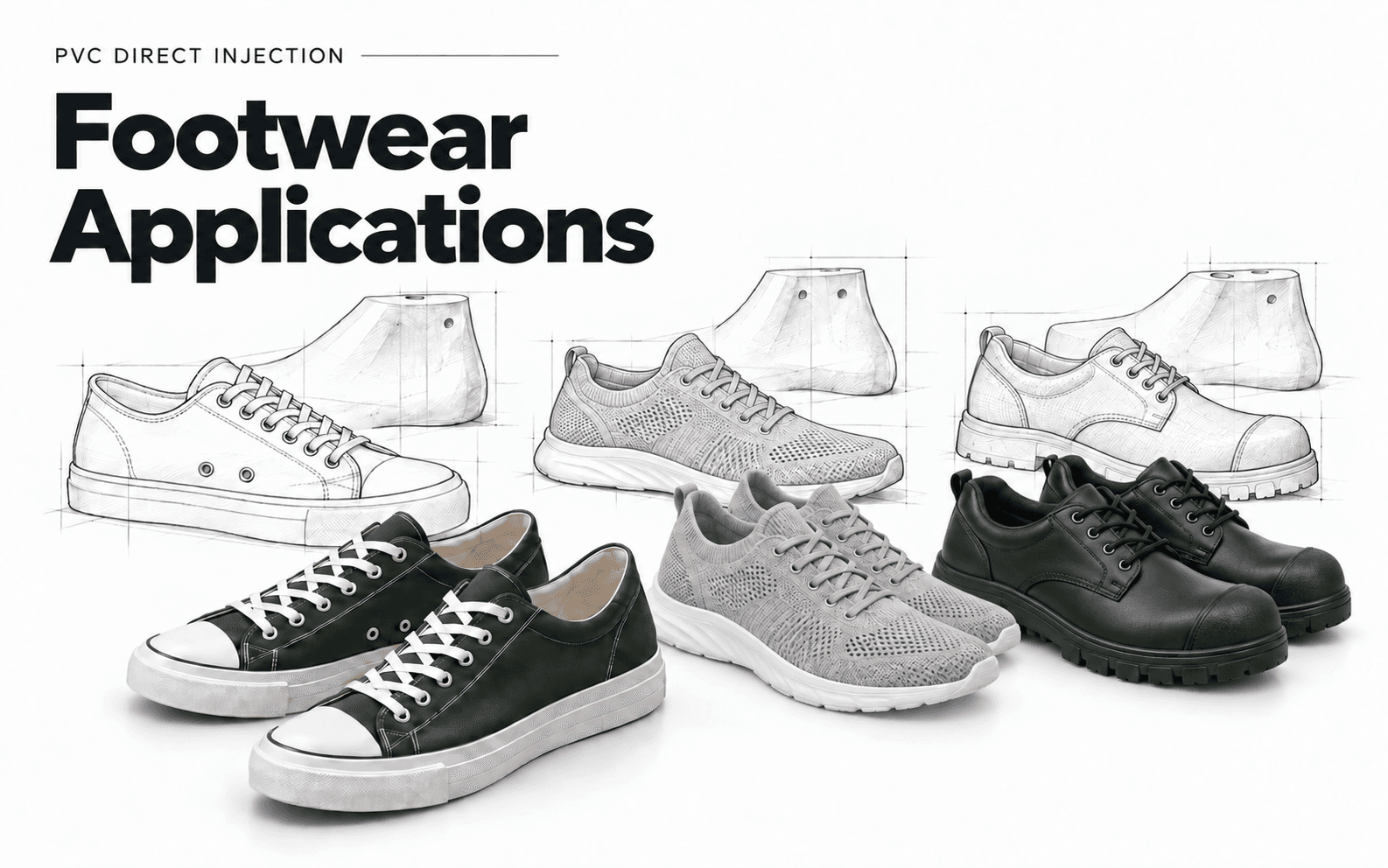
PVC direct injection is a viable option for work shoes
Yes. PVC direct injection can be used to manufacture work shoes by molding a PVC sole directly onto a prepared upper. Its suitability depends on the footwear design, PVC compound, upper compatibility and intended working conditions. Choosing this process alone does not establish the protective performance of the finished shoe.
There is an established technical basis for this application: DESMA records PVC in the history of direct soling, while compound supplier Teknor Apex lists industrial shoes and soles among its flexible PVC applications. These sources establish a material and process possibility, rather than approval of any particular shoe design. [1, 2]
For a footwear manufacturer, the useful starting point is the product brief. Define who will wear the shoes, the surfaces they will encounter and the performance claims you intend to make. General work footwear and safety footwear with specified protective functions require different levels of product development and validation.
How PVC direct injection joins the sole to the upper
PVC direct injection is a shoe construction process in which a prepared upper is positioned on a last and a sole mold closes around its bottom. Plasticized PVC is injected into the cavity to form the sole against the upper. After cooling, the shoe is removed for finishing and inspection. Direct soling combines sole formation with attachment to the upper. [3]
In cemented construction, a separately made sole is attached to the upper using an adhesive system. In direct injection, the sole takes shape at the upper during molding. This also differs from molding an entire plastic boot: the work shoe discussed here retains a separately prepared upper.
The practical point is compatibility. A promising PVC compound still needs to work with the selected upper material and construction. Sample development should confirm that the attachment withstands the required flexing and wear. For a broader explanation, see our guide to the direct injection process for shoe making.
Why manufacturers consider PVC direct injection
Integrating sole formation and attachment can simplify the production sequence. For a factory comparing it with a cemented construction, the opportunity is to reduce separate sole handling and some bonding operations. The actual benefit depends on the upper preparation, finishing work and quality controls that remain necessary.
It is also worth evaluating for repeat orders with a stable design and size range. A reusable mold set provides a basis for repeat production, but output planning should include the size mix, mold changes and available operators. Assess a proposed line using saleable pairs per shift, rather than nominal machine capacity alone.
PVC compounds offer scope to adjust hardness, color and other properties. Teknor Apex describes both industrial footwear grades and softer foamed formulations. This flexibility gives a development team options, but properties must be specified together: a softer sample should still meet the agreed durability requirements. [2]
Cost comparisons should include compound consumption per pair, molds, labor, energy, rejects and maintenance. Request quotations against the same shoe specification and expected order volume. A lower compound price per kilogram is insufficient evidence of a lower finished-shoe cost. For a frequently changing product range, also account for the investment tied up in tooling.
Workplace applications to evaluate
Warehousing is a useful starting scenario for evaluation. For picking and packing roles, define walking distance, floor condition and shift length before selecting the sole. Compare prototype weight, fit and underfoot comfort with the existing product. Where falling objects or other hazards are present, include the required protective features in the brief.
Logistics work can involve transitions between indoor floors, loading areas and outdoor paths. Identify those transitions explicitly. A shoe intended for a dry sorting area has a different operating brief from one used on wet loading bays. Evaluate the proposed tread and complete shoe under the relevant surface conditions; material choice alone cannot establish slip resistance.
General factory work is another possible application, but the description needs detail. Assembly, packing and maintenance roles may expose footwear to very different conditions. List any oils, cleaning agents, hot surfaces or cold storage areas. Ask for evidence relevant to the actual exposure, rather than relying on a broad description such as industrial grade.
For prolonged standing, include wearer feedback alongside laboratory measurements. Compare cushioning, stability and fit throughout a representative shift. Do not describe a whole shoe as waterproof merely because its sole material resists water: the upper, seams and complete construction also matter.
These scenarios are a framework for selecting and testing samples, not a declaration that every PVC work shoe is suitable for these workplaces. Keep the intended use specific enough that the development team can turn it into measurable acceptance criteria.
Comparing PVC with PU TPU and rubber soles
Compare complete sole systems at equivalent product requirements. Here, PVC means flexible polyvinyl chloride; PU refers to polyurethane soling systems, including cellular grades; TPU means thermoplastic polyurethane. Rubber refers to formulated rubber outsole compounds. These names describe material families with different grades and constructions, not fixed performance levels.
The table summarizes selection considerations. Its material examples are supported by supplier information, while its purchasing checks are practical recommendations. It is not a price quotation or a universal ranking. [2, 4, 5, 6]
| Material | Cost considerations | Weight and comfort | Environment and durability |
|---|---|---|---|
| PVC | Evaluate compound use per pair, tooling and process cost. | Hardness and foaming affect feel; compare finished sample weight. | Industrial grades are available. Verify abrasion and chemical performance for the chosen formulation. [2] |
| PU | Include material dosing, processing and the chosen sole construction. | Cellular systems can provide low density and cushioning. | Select the system for its intended exposure; review hydrolysis and oil resistance by grade. [4] |
| TPU | Compare the specified grade and any combination with a cushioning midsole. | Separate outsole durability from cushioning provided by other layers. | Footwear grades offer abrasion resistance and a range of hardnesses. Check the exact grade. [5] |
| Rubber | Include outsole molding or curing and the attachment route. | Assess outsole thickness and the complete cushioning structure. | Specialized nitrile compounds can target oil and heat exposure; results are compound specific. [6] |
BASF describes low-density PU systems for footwear and TPU grades developed for work and safety outsoles. Vibram describes a nitrile-based rubber compound aimed at work and safety applications, including oil and heat exposure. These examples show why a formulation should be selected for the job; their performance claims should not be transferred to every material in the same family. [4, 5, 6]
If low weight and cushioning dominate the brief, include a suitable cellular PU construction in the comparison. If the outsole must address particular abrasion or exposure conditions, assess relevant TPU or rubber grades alongside PVC. Obtain comparable sample results before choosing. Switching material families can also change the required equipment and attachment process, so confirm the manufacturing route as part of the comparison.
Discuss your work shoe project with Xingzhong
PVC direct injection work shoes are a viable development option when the selected compound, upper construction and working environment are compatible. The decision becomes clearer when manufacturers compare verified performance and total production cost against the same product brief.
For an initial project discussion, send Xingzhong a shoe photo, drawing or sample, together with the intended workplace and target market. Include the required performance, proposed upper material, size range and planned production volume. State whether the project is for general work footwear or a product with defined safety requirements.
Contact Xingzhong to discuss a PVC direct injection production solution for your work shoe project. These details provide a practical starting point for reviewing equipment suitability and planning sample development before a production commitment.
References
Sources reviewed September 11, 2026. Supplier information supports the specific material or process described; it does not certify the proposed finished footwear. Workplace examples and purchasing checks are editorial recommendations.
[1] DESMA. Company history
Historical use of PVC in direct soling.
[2] Teknor Apex. Apex Flexible PVC for Consumer Products
Flexible PVC applications in industrial footwear and formulation options.
[3] DESMA. Direct soling
Direct injection attachment of sole material to the upper.
[4] BASF. Elastopan PU Footwear Systems
Cellular PU soling systems, low density and grade-dependent properties.
[5] BASF. Ideal materials for safety shoes
TPU applications in work and safety shoe outsoles; published October 10, 2017.
[6] Vibram. XS Work Technology
An example of a nitrile-based rubber compound for work soles.