Cases & Solutions
How 11 Shoe Injection Machines Supported a Fast-Growing Indonesian Footwear Factory
From 2017 to 2025, a fast-growing Indonesian footwear brand added 11 Xingzhong shoe injection machines across automatic and semi-automatic, 16- and 20-station configurations. This anonymized case study explains how a stable, mixed fleet supported phased expansion and production continuity.
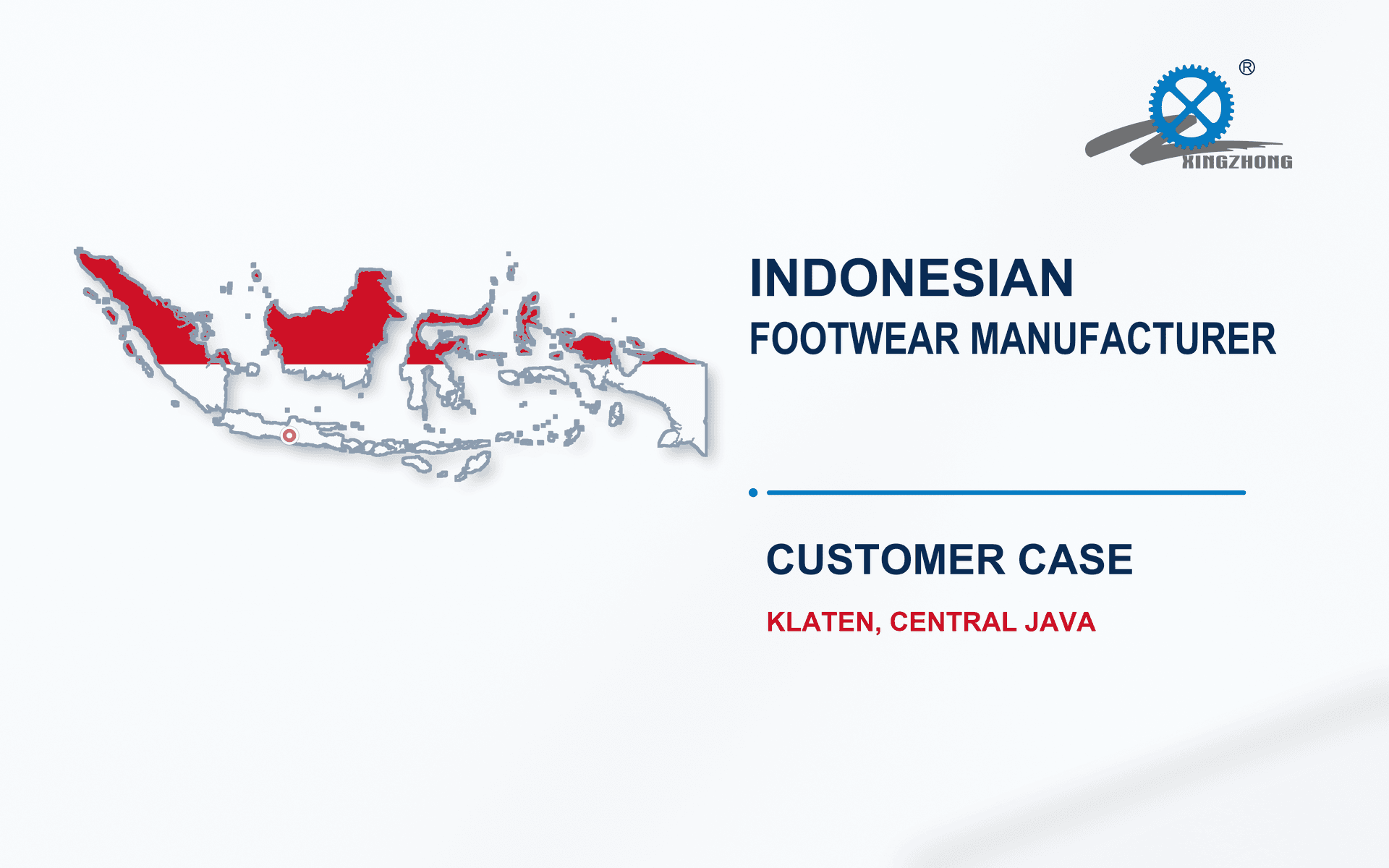
From 2017 to 2025, Xingzhong supplied 11 shoe injection machines to a fast-growing Indonesian footwear brand. The installed fleet combines automatic and semi-automatic operation with 16- and 20-station rotary configurations. Rather than depending on one uniform machine type, the customer expanded in stages and selected different levels of automation and station capacity for changing production requirements. Stable machine performance gave the factory a dependable production base as the business increased its scale, product variety and market reach.
Customer Profile: Growth from a Local Brand to Industrial Scale
The customer is a locally founded footwear business with its manufacturing base in Central Java, Indonesia. Public company information places its establishment around 2015. It first built demand through accessible footwear and later broadened its product and sales mix, including a stronger shift toward online channels around 2019. That commercial change was followed by rapid growth and a larger requirement for dependable in-house production.
Historical public reporting illustrates the scale reached during that expansion. Sources published from 2020 to 2023 described daily production in a range of approximately 6,000 to 9,000 pairs. Later reporting described a production site exceeding 10,000 square meters and a workforce above 3,000 people. These figures are historical context, not a statement of the factory's current capacity, staffing or output.
For a factory operating at this level, machine availability, consistent cycles, operator familiarity, mould planning and service continuity influence whether demand becomes finished footwear. The customer's repeated purchases over nine calendar years show a practical pattern of phased equipment planning.
Customer confidentiality
The brand and legal factory names are withheld. Regional and historical operating data are included to show the scale of the application without disclosing direct identifiers.
The 2017-2025 Shoe Injection Machine Fleet
Data basis: Xingzhong project records; no per-year or per-configuration breakdown is inferred.
Confirmed Xingzhong machine fleet supplied from 2017 to 2025
- Supply period: 2017-2025 — Nine calendar years from the first purchase through the latest recorded supply year
- Total machines: 11 — Cumulative Xingzhong shoe injection machines supplied by the end of 2025
- Automation: Automatic + semi-automatic — A mixed fleet rather than a single automation level
- Rotary stations: 16 + 20 stations — Two station formats used across the installed fleet
- Application: Direct injection footwear production — Machine, mould and process details remain product- and project-specific
This fleet snapshot matters because it shows a repeatable expansion pattern without overstating performance. The case confirms the length of the relationship, the cumulative machine count and the configuration range. It does not claim a specific output per machine, an energy-saving percentage, a downtime rate or a direct one-to-one connection between each purchase and a particular sales milestone.
Why a Mixed Configuration Can Support Expansion
Automatic and semi-automatic machines serve different operating priorities
Automatic configurations are commonly considered when a factory wants more integrated control and a repeatable operating sequence. Semi-automatic configurations can remain useful where manual intervention, product variation, operator control or the investment sequence makes a different balance appropriate. The right choice depends on the shoe design, upper preparation, material, mould, labour organization, target cycle and factory utilities.
Using both approaches within one production base can give management more options when assigning styles and planning future investment. It does not mean that one automation level is universally superior. The value comes from matching each machine configuration to a defined production role and maintaining common operating and service knowledge across the fleet.
Sixteen and twenty stations provide different capacity-planning options
Rotary station count affects how many mould positions are available in the operating sequence, but station count alone does not determine finished output. Actual productivity also depends on material preparation, injection settings, cooling time, mould layout, operator loading, shoe construction and quality requirements. A 16-station format may fit a particular product mix, floor plan or investment stage, while a 20-station format can provide additional mould positions where the overall process supports them.
For this customer, the presence of both formats indicates phased capacity planning rather than a single oversized purchase. New equipment could be added as demand, product categories and operating experience developed, while existing machines continued to contribute to the production base.
Factories comparing these formats can review Xingzhong's rotary shoe injection molding machine and enclosed-station rotary shoe injection machine before requesting a project-specific configuration.
Stable Equipment as Production Infrastructure
In a fast-moving footwear business, growth can create operational pressure. More orders may require longer production windows, additional styles, more mould changes and tighter shipment planning. If core injection equipment is unreliable, those pressures can spread into work-in-process inventory, labour scheduling, quality control and delivery commitments.
The value of stable machinery is therefore practical: it gives production teams a more predictable platform for planning. Across the 2017-2025 period, the customer continued to add Xingzhong equipment until the recorded fleet reached 11 units. That repeat-purchase pattern is consistent with equipment that remained useful within the customer's expansion program. It should be read as evidence of a sustained supplier relationship, not as a guarantee that every factory will obtain the same commercial result.
Long-term value also depends on the surrounding production system. Correct material selection, mould compatibility, water and power conditions, preventive maintenance, operator training and timely technical support remain essential. A machine can support growth only when it is specified and operated as part of the complete footwear process.
What Footwear Manufacturers Can Learn from This Case
- Expand in defined stages. A phased fleet can align capital spending with proven demand, available floor space and the factory's ability to absorb new capacity.
- Specify around the product. Shoe construction, sole material, mould design and production sequence should guide automation and station decisions.
- Treat station count as one variable, not a capacity promise. Cooling, loading, material and quality requirements must be evaluated with the rotary layout.
- Plan for fleet-level continuity. Common operating practices, spare-part planning, training and service communication become increasingly important as machine count grows.
- Separate equipment contribution from market performance. Machinery can provide stable production support, while sales growth also depends on product, pricing, distribution, marketing and management execution.
A Practical Planning Sequence for the Next Production Line
- Define the footwear styles, size range, materials and target daily or shift output using realistic product-change assumptions.
- Review mould construction and cooling requirements before fixing the rotary station count.
- Choose the automation level according to labour organization, process control needs, product variation and investment priorities.
- Confirm factory utilities, installation space, upstream preparation and downstream finishing capacity so the injection machine is not isolated from the rest of the line.
- Agree on training, commissioning, preventive maintenance, spare parts and technical communication before shipment.
Frequently Asked Questions
Should a growing shoe factory choose an automatic or semi-automatic injection machine?
The choice should follow the production process rather than a general preference. Automatic operation may support a more integrated sequence, while semi-automatic operation may suit factories that need more manual control, product flexibility or a staged investment. Material, mould, labour, utilities and target output must be reviewed together.
What is the difference between a 16-station and a 20-station shoe injection machine?
The main difference is the number of mould positions available on the rotary layout. A higher station count can create more production positions, but actual output still depends on injection, cooling, loading, mould and quality-control conditions. Station count should be selected from the complete cycle, not used as a standalone productivity figure.
Why would one factory operate a mixed fleet?
A mixed fleet can support different products, investment phases and operating priorities. It can also allow a factory to add capacity progressively instead of replacing every machine with one standardized configuration. The fleet still needs coordinated training, maintenance and production planning.
Why does long-term machine stability matter during expansion?
Stable equipment helps production teams plan shifts, mould changes, labour and deliveries with fewer avoidable disruptions. It does not create market demand by itself, but it can provide the dependable manufacturing base needed to respond when demand grows.
Plan a Shoe Injection Machine Fleet Around Your Production
This Central Java case shows how a footwear manufacturer can build capacity over time with multiple automation levels and rotary station formats. By the end of 2025, the customer's Xingzhong fleet had reached 11 machines supplied across a nine-year period. The central lesson is not to copy a machine count, but to align each addition with the product, mould, process, utilities and growth stage.
To review a 16- or 20-station automatic or semi-automatic configuration for your factory, contact Xingzhong with your shoe samples, material, target output and factory conditions. Our team can evaluate the machine, mould and production requirements as one project.